
Introduction
Every child learns differently, and many students understand concepts better when they can see, touch, and experience them rather than simply read about them in a textbook.
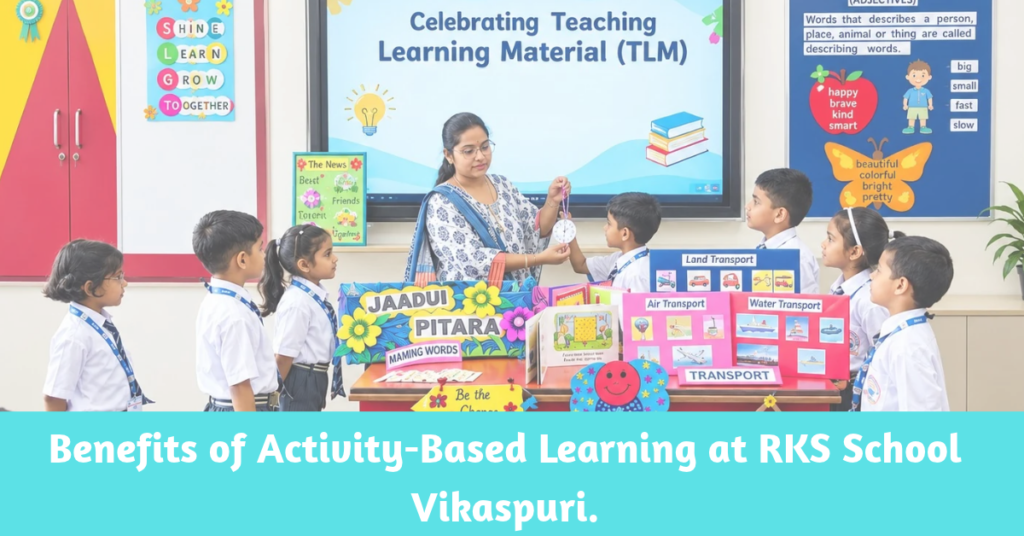
Activity-based learning is a teaching approach in which students learn through hands-on tasks, group activities, experiments, and real-life experiences instead of relying solely on classroom lectures and rote memorisation. Understanding the benefits of activity-based learning at RKS School Vikaspuri can help parents appreciate how practical and interactive teaching methods can support children’s education.
For parents exploring meaningful learning opportunities, understanding the benefits of activity-based learning is worthwhile, especially as schools across India, including Delhi, increasingly incorporate interactive teaching approaches to encourage curiosity, participation, and overall development.
10 Benefits of Activity-Based Learning for School Students
1. Makes Learning More Engaging
When a Class 4 student builds a small volcano model to understand a scientific concept or a Class 7 student acts out a historical event, learning becomes more interesting and enjoyable.
Students are often more attentive when they actively participate in classroom activities rather than simply listening to explanations. Hands-on tasks make lessons interactive and encourage curiosity, enthusiasm, and participation. These are some of the key benefits of activity-based learning at RKS School Vikaspuri that parents may consider when exploring different teaching approaches.
2. Improves Understanding and Retention
Textbooks explain concepts, but practical activities allow students to explore them through experience. For example, a science teacher demonstrating photosynthesis through a simple plant experiment can help students understand the process more clearly.
By engaging multiple senses through observation and practical exploration, children can develop a deeper understanding of concepts and remember information more effectively. This makes activity-based learning for students at RKS School a relevant consideration for parents interested in interactive educational approaches.
3. Encourages Critical Thinking
Projects, puzzles, and open-ended tasks encourage students to ask questions, analyse information, and explore different solutions instead of simply memorising answers.
For example, when students are asked to design a simple bridge using ice-cream sticks, they begin thinking about balance, strength, materials, and design. Such activities encourage logical reasoning, independent thinking, and the ability to evaluate different possibilities.
4. Builds Creativity
Projects, storytelling sessions, drawing exercises, and role-playing activities give children opportunities to express their ideas in different ways.
For instance, a Class 3 student asked to draw or narrate a story about a farmer’s daily life may develop imaginative details beyond what a traditional worksheet might encourage. These activities support original thinking, self-expression, and creative exploration.
5. Develops Problem-Solving Skills
Classroom activities can introduce students to practical challenges and real-world situations. Whether they participate in a mathematics treasure hunt or conduct a science experiment that does not go as planned, students learn to explore different approaches and work through mistakes.
These experiences help children develop patience, logical reasoning, adaptability, and the ability to find solutions independently. These skills highlight the benefits of activity-based learning at RKS School Vikaspuri when considering the role of practical education in children’s development.
6. Improves Collaboration and Teamwork
Many classroom activities, including science projects, group discussions, and collaborative assignments, encourage students to work together.
Through these experiences, children learn to share responsibilities, respect different opinions, listen to others, and work towards common goals. Developing teamwork skills at an early age can also prepare students for future academic and professional challenges.
7. Builds Communication Skills
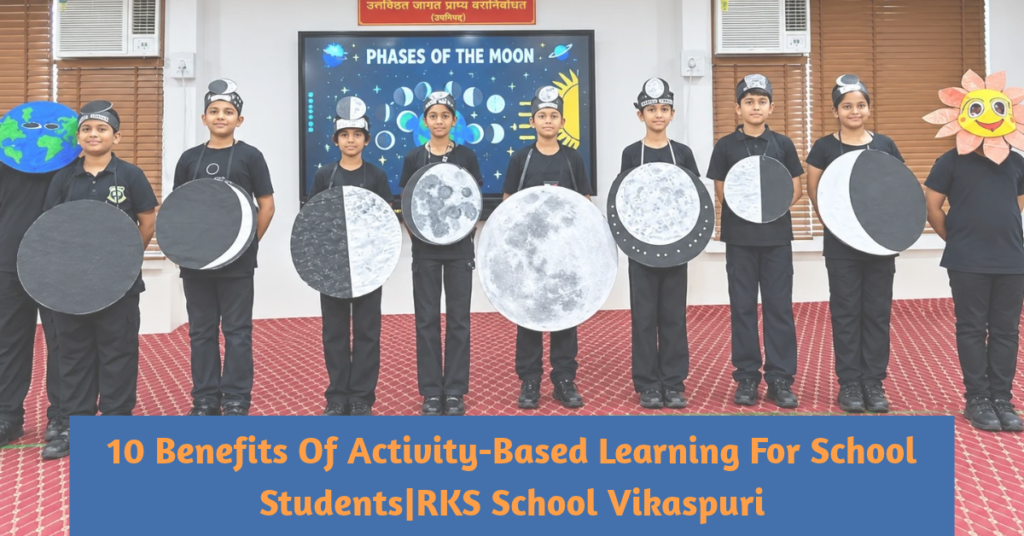
When students present project findings, explain their ideas, or participate in discussions, they have opportunities to improve their communication skills.
Regular participation can help children become more comfortable speaking in front of others, asking questions, and expressing their thoughts clearly. These experiences also encourage active listening and respectful communication. Activity-based learning for students at RKS School is an important topic for parents exploring how practical activities can support the development of these essential skills.
8. Increases Confidence and Participation
Children who feel hesitant to speak during classroom discussions may find it easier to participate in hands-on activities and group tasks.
When students are encouraged to explore ideas and learn through experience, they can express themselves without feeling that every answer must be perfect. This approach can help them develop self-confidence, participate more actively, and become more comfortable sharing their thoughts.
9. Connects Classroom Learning with Real Life
Practical activities help students understand how classroom concepts apply to everyday situations.
For example, a visit to a local market can help students understand buying and selling, while measuring ingredients during baking can demonstrate fractions and basic mathematics. These experiences make abstract concepts easier to understand by connecting them with familiar situations. They also highlight the benefits of activity-based learning at RKS School Vikaspuri for parents interested in practical teaching methods.
10. Encourages Independent Learning
When children participate in research tasks, experiments, and individual projects, they learn to explore topics and find answers independently.
This approach encourages curiosity, responsibility, and self-directed learning. Over time, students can become more confident in exploring new subjects, asking questions, and taking responsibility for their own learning.
How Activity-Based Learning Supports Students' Overall Development
The benefits of activity-based learning at RKS School Vikaspuri can include supporting children’s academic and personal growth through practical and interactive teaching approaches. When activities are carefully designed around learning objectives, they can encourage curiosity, communication, collaboration, creativity, and independent thinking.
Similarly, activity-based learning for students at RKS School is worth exploring for parents who want to understand how interactive teaching methods can help children grasp concepts, participate in classroom activities, and develop essential life skills.
Parents can contact RKS School Vikaspuri to learn more about its teaching methods, classroom activities, and opportunities for practical learning.
Conclusion
Activity-based learning offers students opportunities to understand concepts through practical experiences, collaborate with classmates, and explore new ideas. By encouraging participation and curiosity, hands-on activities can make learning more engaging and meaningful.
These experiences can help children develop confidence, creativity, communication, and problem-solving skills. When supported by clear learning objectives and effective teaching, activity-based approaches can complement classroom instruction and help students build a strong foundation for academic progress and lifelong learning.
FAQ's
1. What is activity-based learning?
Lorem ipsum dolor sit amet, consectetur adipiscing elit. Ut elit tellus, luctus nec ullamcorper mattis, pulvinar dapibus leo.
2. How is activity-based learning different from traditional teaching?
Lorem ipsum dolor sit amet, consectetur adipiscing elit. Ut elit tellus, luctus nec ullamcorper mattis, pulvinar dapibus leo.
3. Is activity-based learning suitable for all age groups?
Lorem ipsum dolor sit amet, consectetur adipiscing elit. Ut elit tellus, luctus nec ullamcorper mattis, pulvinar dapibus leo.
4. Can activity-based learning improve academic performance?
Lorem ipsum dolor sit amet, consectetur adipiscing elit. Ut elit tellus, luctus nec ullamcorper mattis, pulvinar dapibus leo.
5. Can activity-based learning be used for all subjects?
Yes. Teachers can use experiments in science, puzzles and measurement tasks in mathematics, and storytelling, discussions, and role-playing in language classes. Activities should be selected according to the subject, learning objectives, and students’ needs.